
Posted October 19, 2026
By cruise ship attorney, Joel Barnett
When a passenger gets hurt on a cruise ship waterslide or FlowRider, the first assumption is usually that it was just bad luck, or that the rider took a risk and lost. But many of these injuries have less to do with the attraction itself and more to do with how the cruise line ran it that day: who was staffing it, what they were watching, and whether the ship’s own safety rules were actually followed.
In a new video, the attorneys at Waks & Barnett, P.A. walk through the common causes of injuries on onboard recreational attractions. Two of those causes deserve a closer look, because they point directly at decisions the cruise line controls.
Why Crew Supervision Matters on Onboard Attractions
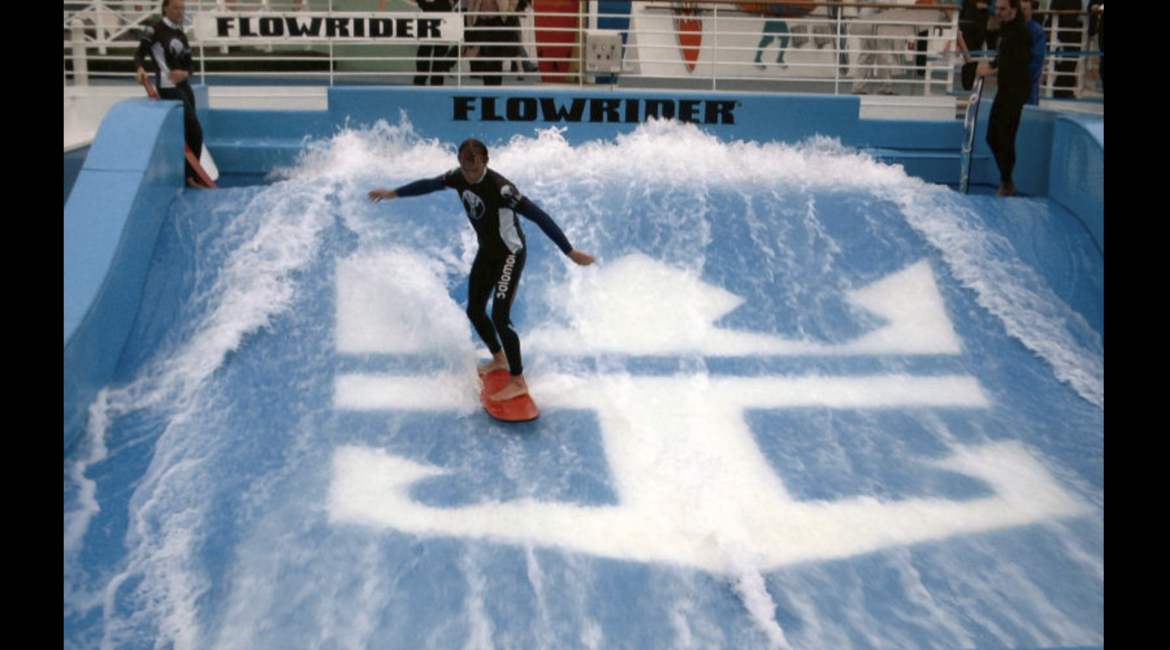
Waterslides and surf simulators like the Royal Caribbean FlowRider are not self-service rides. Cruise lines assign crew members to run them, and those attendants are the only safeguard between a passenger and a dangerous situation.
Supervision failures that lead to injuries include:
- Understaffing. One attendant trying to manage a line, a launch point, and the landing area at the same time cannot see everything.
- Distracted or absent attendants. A crew member who steps away, is on a phone, or is talking with other passengers may miss a rider in trouble.
- Not enforcing the rules. Height, weight, age, and health restrictions only protect passengers when crew members actually check them.
- Not stopping the ride. When a rider falls, gets stuck, or is struggling, a trained attendant should halt the attraction immediately.
When Operating Procedures Break Down
Cruise lines and equipment manufacturers write operating procedures for these attractions for a reason. Injuries often follow when those procedures are skipped, rushed, or ignored, for example:
- Dispatching riders too close together. Sending the next rider down a slide before the previous one has cleared the run-out can cause violent collisions.
- Skipping safety instructions. First-time FlowRider riders often have no idea how to fall safely. A rushed or skipped briefing can be the difference between a wipeout and a serious head, neck, or shoulder injury.
- Ignoring conditions. Running an attraction in high winds, rough seas, or with standing water around the entry and exit points creates hazards the procedures are meant to prevent.
- Allowing unsafe riding positions. Head-first riding, standing on a body-board ride, or riding in pairs where it isn’t permitted all increase the risk of injury.
Long lines and busy sea days create pressure to move passengers through quickly. Safety procedures protect riders only when they are actually followed.
The Legal Standard: Reasonable Care
Under maritime law, a cruise line can be held responsible for a passenger’s injury when its negligence caused the accident. Cruise lines are not liable for every risk that comes with a waterslide or FlowRider, but they do have a legal duty to exercise reasonable care to keep passengers safe. Staffing an attraction properly, training attendants, and following established operating procedures are part of that duty.
Many cruise lines also require passengers to sign a waiver before riding. Federal law, 46 U.S.C. § 30527, generally prevents cruise lines from using contract terms to excuse themselves from liability for their own negligence, so signing a waiver does not automatically end a claim. Learn more about your rights after a Royal Caribbean accident.
Evidence That Can Prove a Supervision or Procedure Failure
These cases often turn on records the cruise line controls, which is why early action matters. Useful evidence can include:
- Onboard surveillance video of the attraction
- Staffing schedules showing how many crew members were assigned
- Attendant training records and certifications
- The attraction’s written operating procedures and manufacturer guidelines
- Incident reports and prior accident history on the same attraction
- Photos, videos, and contact information from witnesses
Surveillance footage in particular may be overwritten if no one asks for it to be preserved. An experienced cruise ship accident lawyer can send a preservation demand quickly.
Deadlines and Where Your Case Will Be Filed
Most cruise ticket contracts require injured passengers to give written notice of a claim within six months and to file a lawsuit within one year. These are time limits that are shorter than most passengers expect. Most major cruise lines also require lawsuits to be filed in federal court in Miami, the U.S. District Court for the Southern District of Florida, where Waks & Barnett practices.
Frequently Asked Questions
I signed a waiver before riding. Can I still file a claim?
Often, yes. A waiver generally cannot shield a cruise line from liability for its own negligence, such as poor supervision or ignoring operating procedures.
My injury happened on a slippery pool deck, not on the ride. Is that different?
Deck injuries can also lead to claims. Read more about cruise ship slip and fall accidents.
Get a Free Case Review
If you were hurt on a cruise ship waterslide, FlowRider, or other onboard attraction, call Waks & Barnett, P.A. at 1-305-271-8282 or find out if you have a case with a free, confidential review. Hablamos Español.
Image credit: Francs2000 | Wikimedia Commons | https://commons.wikimedia.org/wiki/File:Flowrider.jpg
